
Clay County Arrest Records and Court Charges
Clay County arrest records document the law enforcement side of an event: the arresting agency, intake, custody status, and booking-related questions. The Clay County Sheriff's Office operates the detention center and handles local law enforcement records. The court charge record is different. It begins when a charge is filed through a citation, warrant, criminal summons, magistrate's order, indictment, information, or similar charging paper.
The prosecutor's role is central after arrest. Clay County is in Prosecutorial District 43, and the District Attorney prosecutes criminal matters filed in District and Superior Courts. Prosecutors decide dismissals, reductions, pleas, trials, and other case resolutions. For the full case file after charges are filed, use Clay County criminal court records. For custody and jail status, use sheriff or detention channels rather than assuming the court record is a jail roster.
The official Clay County Sheriff source image anchors the arrest-record side of this page.
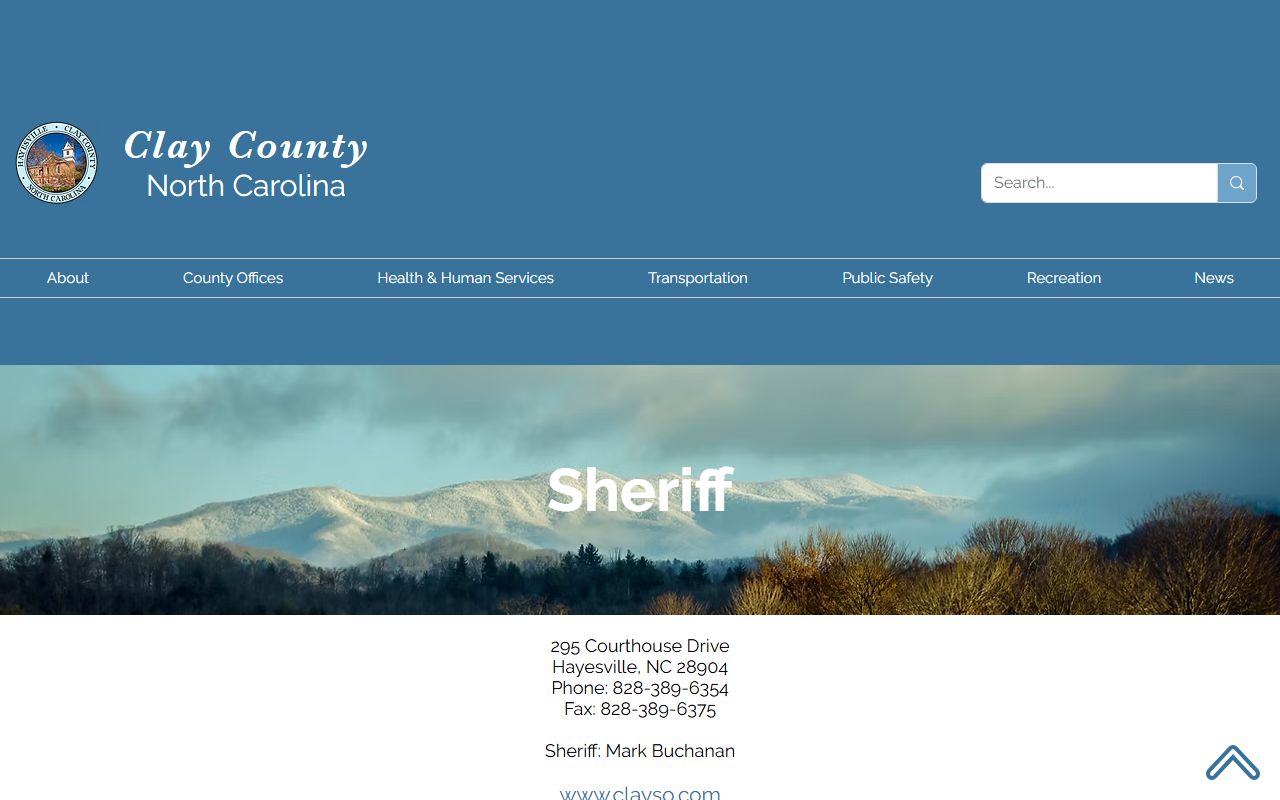
The sheriff source supports the local arrest and detention contact route, while formal court charges are tracked through the court case.
Find Clay County Arrest Records and Charges
For court charges after arrest, start with the North Carolina eCourts Portal or the public terminal at the Clerk of Superior Court. Search by defendant name, case number, citation number, or court date, and narrow to Clay County when the interface allows it. For arrest or jail information, use the Sheriff's Office because the research did not locate an official Clay County public jail roster URL or mugshot database.
- Open the eCourts Portal or start from the Clay County Judicial Branch court page.
- Search by defendant name, case number, citation number, attorney, or court date.
- Open the public case result and read each listed charge, statute, level, and status.
- Check whether the charge is pending, amended, reduced, dismissed, disposed, or tied to a sentence.
- Call the Clerk of Superior Court for certified dispositions or the Sheriff for booking and custody questions.
State-level offender searches are not a substitute for local court charges. The Department of Adult Correction search covers state prison, probation, parole, and historical offender information. VINELink can help with custody notifications where supported. The North Carolina sex offender registry is separate from arrest records and court charge records.
Charging Documents After Arrest
After an arrest or citation, the court charge record depends on a charging document. North Carolina Clay County records can show offense descriptions, statutes, charge class, offense date, case number suffix, plea, disposition, judgment, sentence, costs, fines, and compliance fields. A single arrest can lead to more than one charge, and each charge can end in a different way.
| Complaint | Information | Indictment | |
|---|---|---|---|
| Filed By | Officer, magistrate process, or prosecutor depending on the charge path. | Prosecutor, when that charging method applies. | Grand jury returns the formal felony accusation. |
| Common Use | Citations, warrants, summonses, and misdemeanor-level accusations. | Prosecutor-filed accusation in cases where allowed. | Felony prosecution and serious criminal matters. |
| What It Starts | The court charge record and first case events. | The prosecutor's formal charge record. | Superior Court felony charge processing. |
| Record Fields | Offense, statute, date, defendant, agency, and court date. | Charge, statute, defendant, prosecutor filing, and case number. | Charge, statute, grand jury action, Superior Court case path. |
Clay County Charge Status
Charge status changes as the District Attorney, defense, judge, and clerk move the case through court. A pending charge is only an accusation. An amended or reduced charge may reflect prosecutor review, plea negotiation, or court action. A dismissed charge is not a conviction, but the public record may still exist unless it is sealed or expunged.
| Status | What It Means |
|---|---|
| Pending | The accusation is open and has not reached final disposition. |
| Amended | The charge wording, statute, severity, or count has changed in the court record. |
| Reduced | The charge was lowered to a lesser offense or lower severity level. |
| Dismissed | The court record shows the charge ended without conviction on that count. |
| Disposed | The charge has reached a recorded outcome, such as plea, verdict, dismissal, or judgment. |
| Appealed | The case or issue moved for review in the next court level. |
The U.S. Attorney contact source image is included to separate federal prosecution contacts from Clay County state court charges.
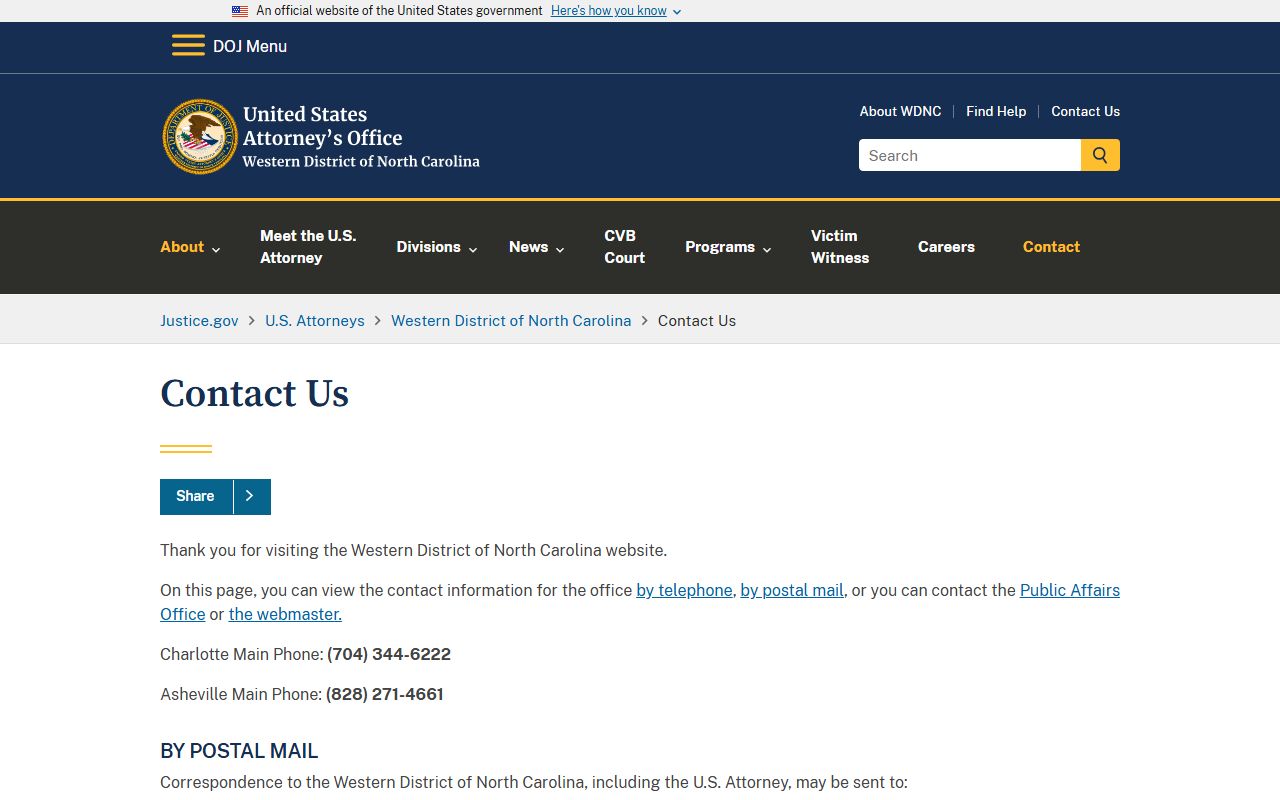
Most Clay County arrest-to-charge matters are state cases, but federal charges use federal prosecutors, federal court records, and different access systems.
Charges vs. Convictions
Clay County arrest records and court charge records can show accusations that never become convictions. A charge is the state's allegation. A conviction is a final criminal outcome after a guilty plea, verdict, or other qualifying judgment. Always read the disposition before treating a charge as the final result.
| Charge | Conviction | |
|---|---|---|
| Stage | Accusation filed after arrest, citation, summons, warrant, or indictment. | Final result after plea, verdict, or judgment. |
| Meaning | The state alleges conduct that must still be resolved. | The court has entered guilt or responsibility on the record. |
| What To Check | Charge code, level, date, prosecutor action, and current status. | Disposition, sentence, probation, costs, restitution, and appeal status. |
Sealed vs. Expunged Charge Records
Some arrest records and charges are restricted. Juvenile delinquency records are not public like adult cases. Adoption and many mental health records are confidential. A sealed record is withheld from ordinary public access. An expunged record is removed from public access after a qualifying court order. North Carolina expunction eligibility depends on charge, disposition, waiting period, prior record, and statutory exclusions.
| Sealed | Expunged | |
|---|---|---|
| Visibility | Not visible to ordinary public search or counter review. | Removed from public access under the expunction order. |
| Common Sources | Juvenile, adoption, mental health, protective, or court-sealed material. | Qualifying dismissed matters or certain nonviolent convictions after statutory review. |
| Clay County Route | Ask the clerk whether access is restricted by law or order. | Identify the case, charge, and disposition before using official expunction forms. |
Charge Codes and Severity Levels
Clay County court charge records can include statute or citation references, offense descriptions, charge class, and case-type letters. A case number with CR signals at least one criminal offense, while IF is used for infraction-only matters. One traffic stop or arrest can produce several charges, and some charges can be infractions while others are misdemeanors or felonies.
Superior Court handles felony criminal cases and appeals from District Court. District Court handles misdemeanors, infractions, traffic cases, and initial lower-level criminal matters. Magistrates are relevant for warrants, initial appearances, bonds, and other front-line judicial actions. When a charge status is unclear, the clerk's court record is more reliable than a short arrest summary.
DA, Public Defender, and App Limits
The District Attorney for Prosecutorial District 43 prosecutes Clay County criminal matters and prepares criminal trial dockets. The Clay Judicial Branch contact directory lists the District Attorney phone as 828-835-7750. North Carolina Indigent Defense Services places Clay County in Defender District 43 and identifies Public Defender Janna Allison. A person who cannot afford counsel and faces qualifying criminal consequences may be able to request appointed counsel.
The Clay County Sheriff's Office app is listed in the Apple App Store and Google Play. The official listings advertise reporting crimes, submitting tips, interactive features, and public safety news and information. The research did not locate an official app-only inmate roster, warrant search, or records request module. Use the app for its advertised public safety functions, but use the clerk, sheriff, DA, or public defender for case-specific records and legal-status questions.
The CourtListener source image is included as a search alternative, but it is not the official Clay County arrest record or charge database.
Unofficial search tools can help with broad research, but Clay County charge status should be verified through court or agency records.
Background Check Considerations
Arrest records and court charges are often misunderstood in background searches. A booking event does not prove guilt. A filed charge does not prove conviction. A dismissed charge can remain visible unless later restricted. For formal employment, housing, credit, insurance, or licensing decisions, casual arrest and charge lookups should not be treated as a regulated consumer report.
Important: Verify arrest, charge, disposition, and expunction status with the official custodian before relying on a record.
Restricted Clay County Charge Records
Restricted Clay County charge records include juvenile matters, sealed charges, expunged records, adoption-related files, mental health proceedings, and records with protected personal identifiers. Law enforcement investigative material can also follow different access rules than the court file. Complete police reports may not be public unless criminal discovery rules require production. Court records, sheriff records, and prosecutor records should be requested from the correct custodian.
For court charges, call the Clerk of Superior Court at 828-389-2300. For arrest, booking, detention, incident, or sheriff records, contact the Sheriff's Office at 828-389-6354. For prosecution questions, contact the District Attorney for Prosecutorial District 43. For appointed-counsel questions, use the North Carolina Indigent Defense Services Clay County page.