
No Official Clay Online Warrant Search Found
Research for Clay County did not locate an official public active-warrant search page published by the county, the Sheriff's Office, or the North Carolina Judicial Branch. That absence matters because a search result from a general people-search site, social media post, or stale third-party list is not a reliable warrant clearance. In Clay County, a warrant question may involve the Sheriff's Office, magistrates, the Clerk of Superior Court, District Attorney staff, and the underlying criminal or traffic file.
The Clay County Sheriff's Office is the local law-enforcement agency tied to service of criminal process and detention. Its Special Services division includes civil and criminal process, while the detention division handles pretrial detainment and transportation of detainees. For a reader trying to verify whether process exists, the safer path is to use the official contact chain and ask what the office can confirm by phone, what requires in-person identification, and whether a deputy, magistrate, clerk, or attorney must be involved.
The Apple App Store listing for the Clay County Sheriff's Office app documents a public-safety app connected to the Sheriff's Office.
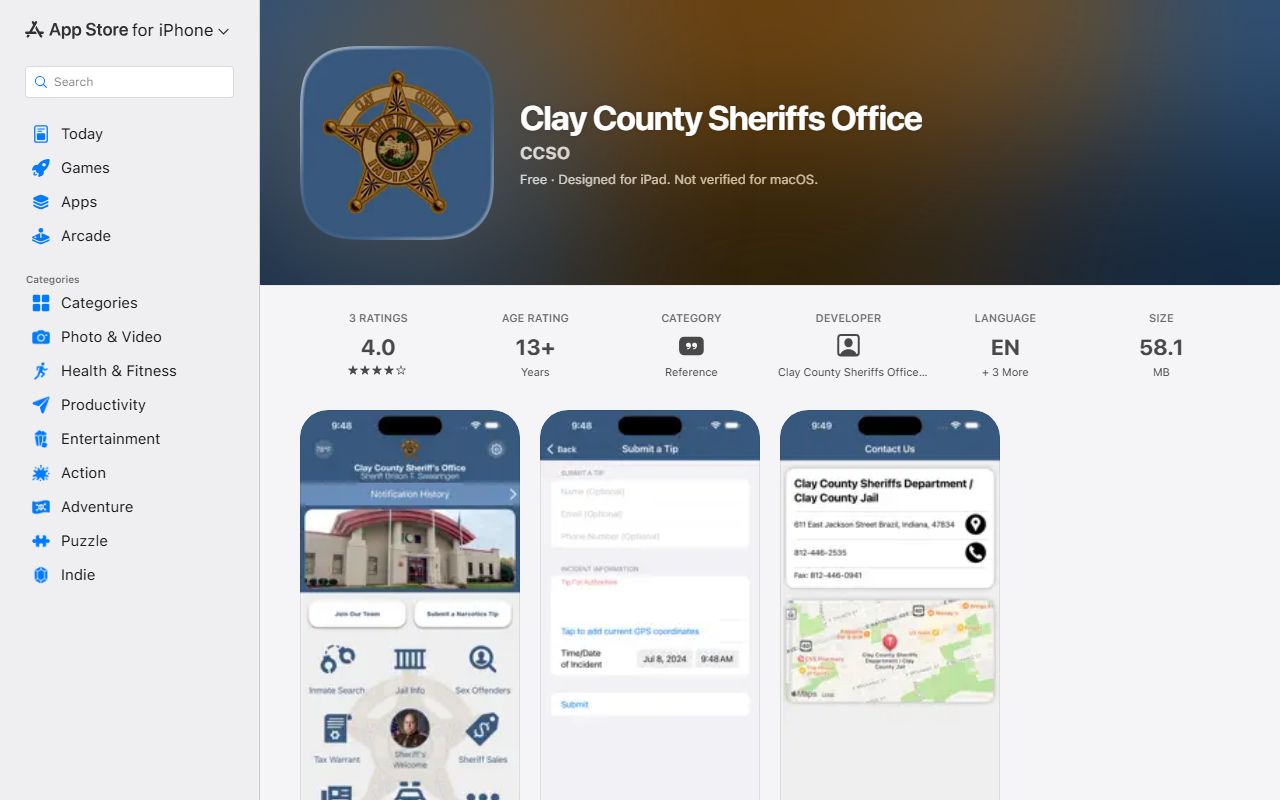
The app listing supports mentioning the app as a communications channel, but the captured listing did not confirm an app-only Clay County active-warrant search, inmate roster, or records request form.
Clay County Warrant Lookup Channels
Because no official warrant database was found, the lookup process is a chain rather than a single search box. Start with the office most closely tied to the question. If the concern is service of active process or an arrest warrant, contact the Clay County Sheriff's Office at 295 Courthouse Drive in Hayesville or by phone at 828-389-6354. If the concern is whether a judicial officer issued process, magistrates are listed by the Judicial Branch at 828-389-2332, with 828-389-6354 as an alternate number.
For court status, missed dates, case numbers, dispositions, and failure-to-appear entries, contact the Clay County Clerk of Superior Court at 828-389-2300. The clerk is not the same as the sheriff, but the court file can show whether a case has an order for arrest, a failure-to-appear event, a new setting, or a disposition. The District Attorney's office at 828-835-7750 may be relevant for prosecution-related questions, especially traffic or criminal matters, but it is not a general public warrant-clearance desk.
The Google Play listing for the Clay County Sheriff's Office app provides the Android version of the public-safety app.
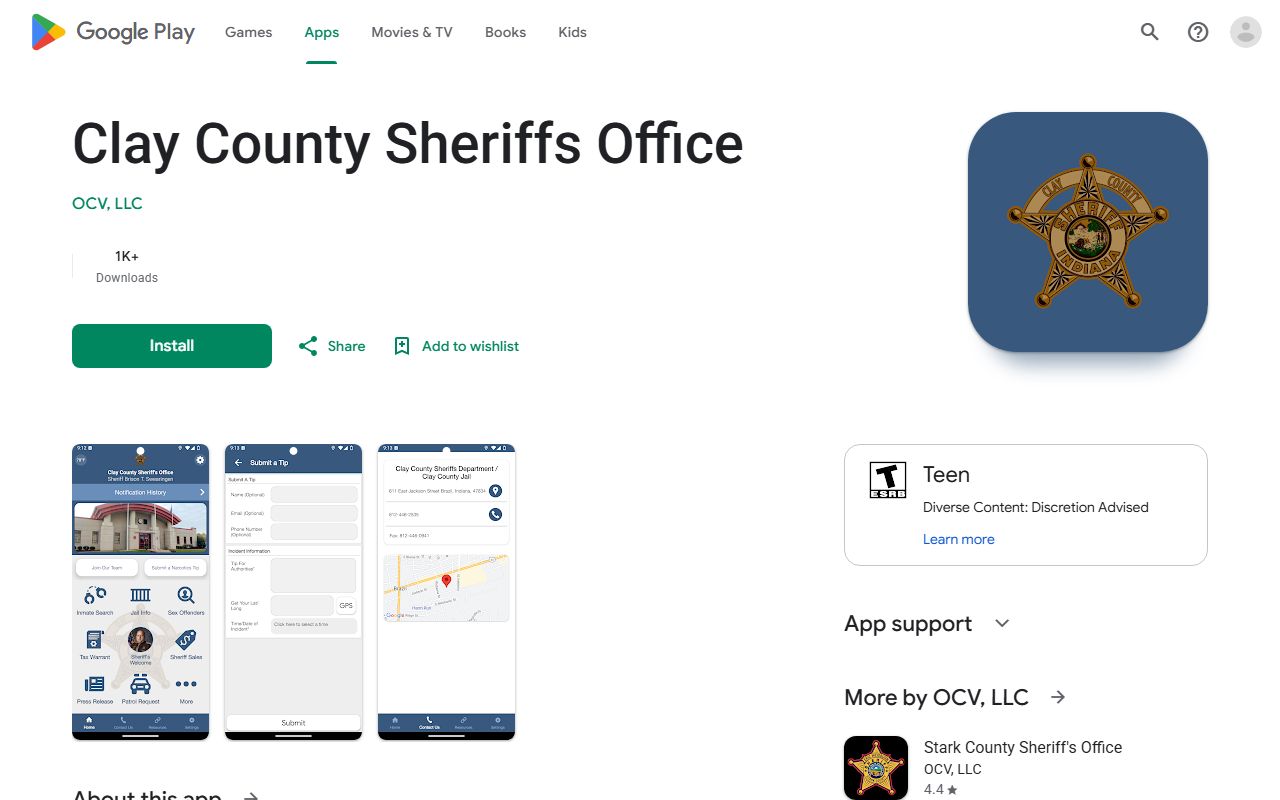
Use the app for documented public-safety communication features such as reports, tips, interactive features, and news, not as proof that a person has or does not have an active Clay County warrant.
Check the Court Case and Court Date
A court search is useful even though it is not the same as a warrant search. The North Carolina eCourts Portal and court-date lookup can help locate Clay County cases by name, case number, citation number, attorney, or county filters where the interface allows. A case record may show a pending criminal case, an upcoming setting, a disposition, costs, or a failure-to-appear event. Traffic guidance says a missed court date can lead to a failure-to-appear notation, DMV consequences, and in some matters an order for arrest.
The Portal should be treated as a case-information starting point. It may not show all documents, older paper files, sealed material, or current law-enforcement service status. If the Portal shows a Clay County case with a missed appearance, contact the clerk about the file and the sheriff or magistrate about active process. If the warrant concern involves a felony, domestic violence matter, probation, extradition, or a bond condition, an attorney can help interpret the record before the person appears at the courthouse or sheriff's office.
Clay County Warrant Search Fields
No official Clay County warrant search form with searchable public fields was located. The table below reflects that finding and separates it from the fields a person should gather before calling the sheriff, magistrate, or clerk. These identifiers help staff distinguish people with similar names and connect the question to the correct court or law-enforcement record.
| Field Label | Type | Required | Notes |
|---|---|---|---|
| No official Clay NC warrant search form located | n/a | n/a | Use sheriff, magistrate, clerk, and court-date channels instead of a county warrant portal. |
| Full legal name | Text | Usually needed | Use the name as it appears on the citation, charge, bond paper, or court notice. |
| Date of birth | Date | Often requested | Helps distinguish records when staff can discuss status. |
| Case or citation number | Text | Useful when known | Connects the inquiry to a Clay County court file or traffic matter. |
Types of Warrants and Related Process
Clay County warrant questions can involve several different documents. Some authorize arrest, some require a court appearance, and some authorize law enforcement to search property. Civil process served by the sheriff is another category and should not be treated as a criminal warrant. A careful caller should ask what kind of document is involved because the response may differ for a criminal arrest warrant, an order for arrest after missed court, a search warrant, or a criminal summons.
- Arrest warrant - issued after probable cause alleging a criminal offense.
- Order for arrest or failure to appear - often tied to a missed court date, violation of release conditions, or unresolved case event.
- Bench warrant or judge's order - issued by a court for failure to comply, contempt, or a missed hearing.
- Search warrant - authorizes a search of a person, place, or property and may not be public immediately.
- Criminal summons - requires appearance in court without immediate arrest.
- Magistrate's order - a charging or release document commonly associated with warrantless arrest processing.
- Fugitive or extradition warrant - involves wanted status from another county, state, or jurisdiction.
What a Clay County Warrant Record May Show
The research file did not identify a live Clay County warrant-result sample, so the inventory below should be read as expected court and law-enforcement data rather than a promise that every field appears in public view. Some information may be withheld while a warrant is unserved, sealed, connected to a juvenile matter, tied to an investigation, or protected by court order.
| Field | What It Shows |
|---|---|
| Person name and identifiers | Name and limited identifying information used to distinguish the subject. |
| Warrant or order number | The process number or related court case number. |
| Issuing authority | The court, judge, or magistrate connected to the process. |
| Charge or offense | The alleged offense, failure-to-appear reason, or related statute when public. |
| Issue date | When the process was issued or entered. |
| Bond or hold information | Bond amount, bond type, hold, or no-bond notation if available. |
| Status | Active, served, recalled, quashed, resolved, or similar status wording. |
VINELink and the SBI Registry Are Different Tools
VINELink is not a warrant search, but it can be relevant after an arrest or when a person wants custody notifications. North Carolina VINELink is used for custody-status information where supported. It can help a victim, family member, or interested person monitor custody changes, but it does not replace the Clay County Sheriff's Office, magistrate, or clerk for active warrant confirmation.
The North Carolina VINELink page is the official statewide custody-notification path identified in the research.
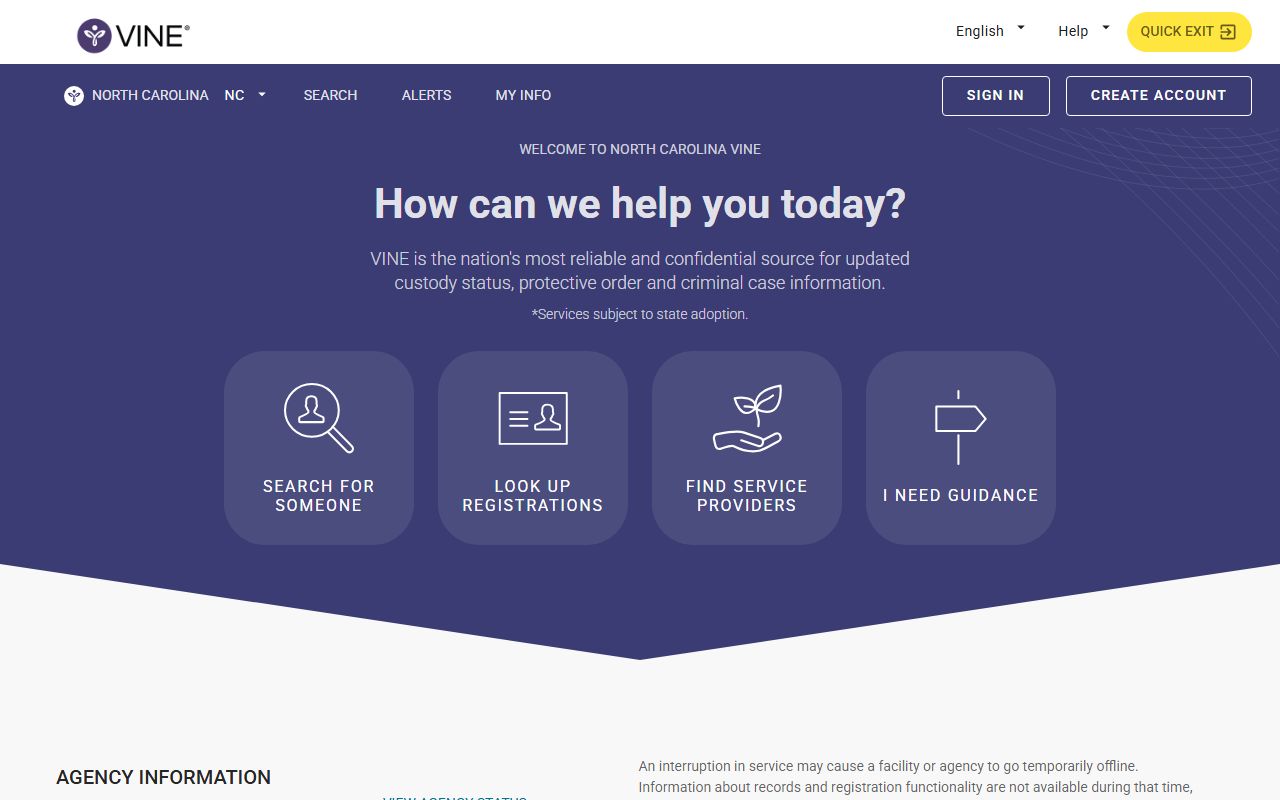
Use VINELink after custody becomes the issue; use the sheriff, magistrate, clerk, and court records when the question is whether process exists or a court case has failed.
The North Carolina State Bureau of Investigation sex offender registry is also separate from warrant records. It lists registered offenders and supports community-safety checks, but it does not show whether someone currently has a Clay County arrest warrant, order for arrest, or unresolved traffic failure-to-appear issue.
The NCSBI sex offender registry is the separate safety registry identified for North Carolina users.
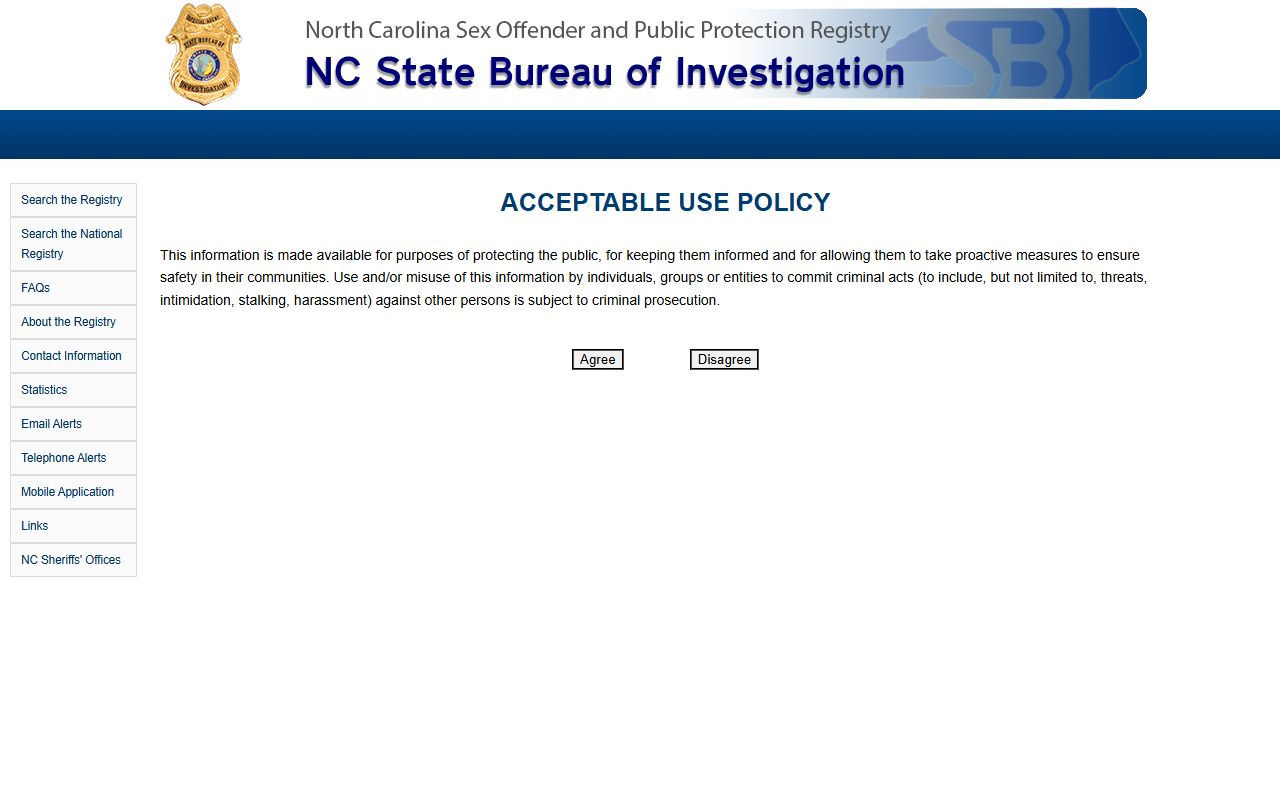
Registry information may support a broader safety check, but warrant status still has to be handled through the court and law-enforcement channels that control Clay County process.
How to Resolve a Suspected Warrant
Do not assume that online payment clears every warrant-related problem. Online waiver or payment may resolve some eligible traffic matters, but active orders, missed court, bond conditions, and arrest warrants often require action by the clerk, magistrate, sheriff, judge, or attorney. The practical sequence is to gather documents first, check court status second, and then contact the office that can act on the specific record.
- Gather full legal name, date of birth, citation or case number, and any charge, bond, or court paperwork.
- Search the eCourts Portal and court-date lookup for Clay County cases, missed settings, and pending dates.
- Call the Clerk of Superior Court about court status, failure-to-appear entries, dispositions, and next court settings.
- Call the Sheriff's Office or magistrate about active process and what can be confirmed by phone or in person.
- If the issue began with a traffic citation, resolve both the court case and any NCDMV license consequence.
- Ask whether bond is cash, surety, unsecured, written promise, or another condition.
- Consult counsel before surrendering on serious charges, probation matters, domestic violence cases, or extradition issues.
- After resolution, confirm that court, sheriff, and driver-license records have updated where applicable.
Important: For serious Clay County charges or possible arrest, speak with a lawyer before appearing for surrender or bond review.
Restricted and Sealed Warrant Records
Some warrant-related records are not available to the public at the time a person wants to search. Search warrants may remain restricted while an investigation is active. Juvenile matters are not open like adult criminal files. Domestic violence, victim safety, mental health, sealed, expunged, or confidential records may have redactions or access limits. A clerk or law-enforcement agency may also refuse to discuss sensitive active process in detail by phone.
North Carolina court records are generally open for ordinary adult cases unless a statute, court rule, or order restricts access. G.S. 7A-109 directs clerks to maintain court records, dockets, and indexes open to inspection except as prohibited by law. That rule does not mean every warrant document is immediately available online. For Clay County, the best-supported statement is narrow: no public active-warrant database was found, court records can provide case clues, and official confirmation should come from the sheriff, magistrate, clerk, or attorney handling the matter.