
Clay County Criminal Court Records
A Clay County criminal court record is the case-level file kept by the Clerk of Superior Court after a criminal charge, citation, warrant, criminal summons, magistrate's order, indictment, or other charging document is filed. It can include the charge list, appearance information, bonds, pleas, motions, orders, hearings, judgments, sentencing terms, probation entries, fines, costs, restitution, and payment or compliance activity.
District Court handles misdemeanors, infractions, traffic, juvenile matters, and magistrate-related criminal steps. Superior Court handles felony criminal cases and misdemeanor appeals. That split matters because a case can begin with an arrest or citation, move through an initial District Court setting, and later reach Superior Court if it is a felony, appeal, or higher trial matter. For the narrower arrest-to-charge path, use the Clay County arrest records and court charges page.
The G.S. 132-6 source image shows the public-record inspection and copy framework that often sits beside Clay County criminal court record requests.
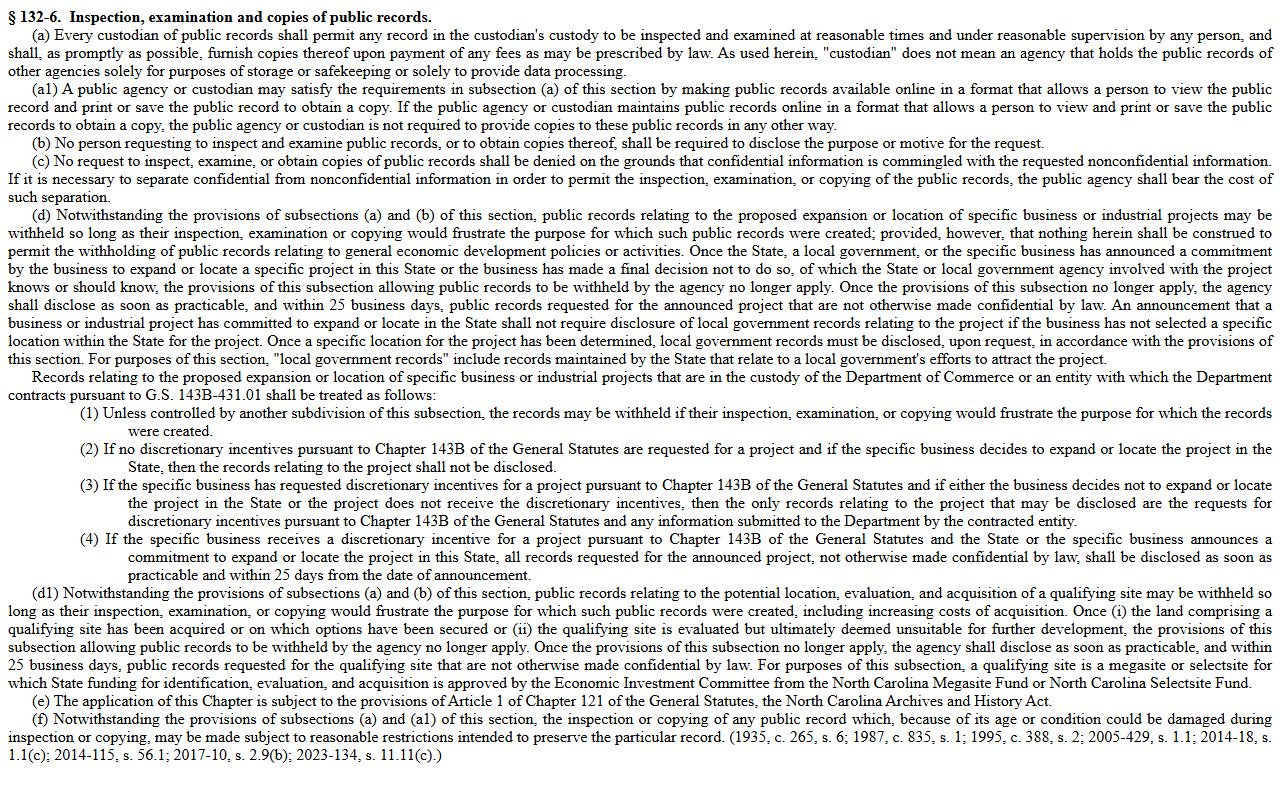
Criminal court case files are still governed by court-specific rules, so the clerk remains the first local source for certified dispositions and complete records.
Search Clay County Criminal Court Records
The main online path is the North Carolina eCourts Portal. The portal can search public case information and court dates, but the Judicial Branch warns that people doing background checks should use the county clerk's office rather than relying on portal results alone. Criminal case information is also available at public self-service terminals and can be searched by defendant name, case number, or victim/witness name.
- Open the eCourts Portal or start from the Clay County Judicial Branch page.
- Search by defendant name, case number, attorney, citation number, or hearing date.
- Use Clay County as the county or location filter when the statewide system offers it.
- Open the case and read the charge list, docket events, plea, disposition, sentence, and next court date.
- Request a certified copy or complete file from the Clerk of Superior Court when the public result is not enough.
State offender and custody systems are separate. The Department of Adult Correction search covers state prison, probation, parole, and historical offender records. It is not the Clay County criminal court file. Court records come from the court system; jail custody questions go to the sheriff or detention center.
Clay County Criminal Case Flow
A criminal court record grows as the case moves from accusation to outcome. Each stage can create a docket entry or document. Some cases end early with dismissal, plea, or diversion. Others proceed to trial, judgment, sentence, probation, appeal, or payment enforcement.
Case flow: Charges Filed › Arraignment › Pretrial / Motions › Plea or Trial › Disposition › Sentencing
| Stage | What Happens |
|---|---|
| Charges Filed | A citation, warrant, summons, magistrate's order, information, or indictment creates the criminal accusation in court. |
| Arraignment | The court addresses the charge and plea posture, and future dates may be set. |
| Pretrial / Motions | Attorneys may file motions, seek discovery, discuss plea terms, or ask for continuances. |
| Plea or Trial | The case resolves through a plea, bench trial, jury trial, dismissal, or other court action. |
| Disposition | The court records how each charge ended, including guilty, not guilty, dismissed, or other results. |
| Sentencing | The judgment can include jail or prison time, probation, fines, costs, restitution, and compliance terms. |
What Clay County Criminal Records Show
Clay County criminal court records should be read by field, not just by name match. A person can have multiple cases, and a single case can have more than one charge. The case number, division, offense date, charge class, docket event, plea, disposition, and sentence all work together to explain the court outcome.
| Field | What It Shows |
|---|---|
| Case Number | Unique court file number, often with year and criminal or infraction case-type letters. |
| Defendant | Name of the person charged, plus attorney details where public. |
| Court Division | District Court for misdemeanors and infractions, or Superior Court for felonies and appeals. |
| Charges | Offense description, statute or citation, offense date, charge class, and charge status. |
| Docket Events | Warrant, indictment, arraignment, motion, order, continuance, plea, judgment, dismissal, appeal, or payment entry. |
| Plea | The defendant's formal answer to a charge, where shown. |
| Disposition | How each charge ended, such as guilty, not guilty, dismissed, reduced, or otherwise resolved. |
| Sentence | Punishment and terms after conviction, including confinement, probation, fines, costs, restitution, or compliance rules. |
The North Carolina Indigent Defense Services Clay County page is an assigned source image for the defense side of Clay County criminal court records.
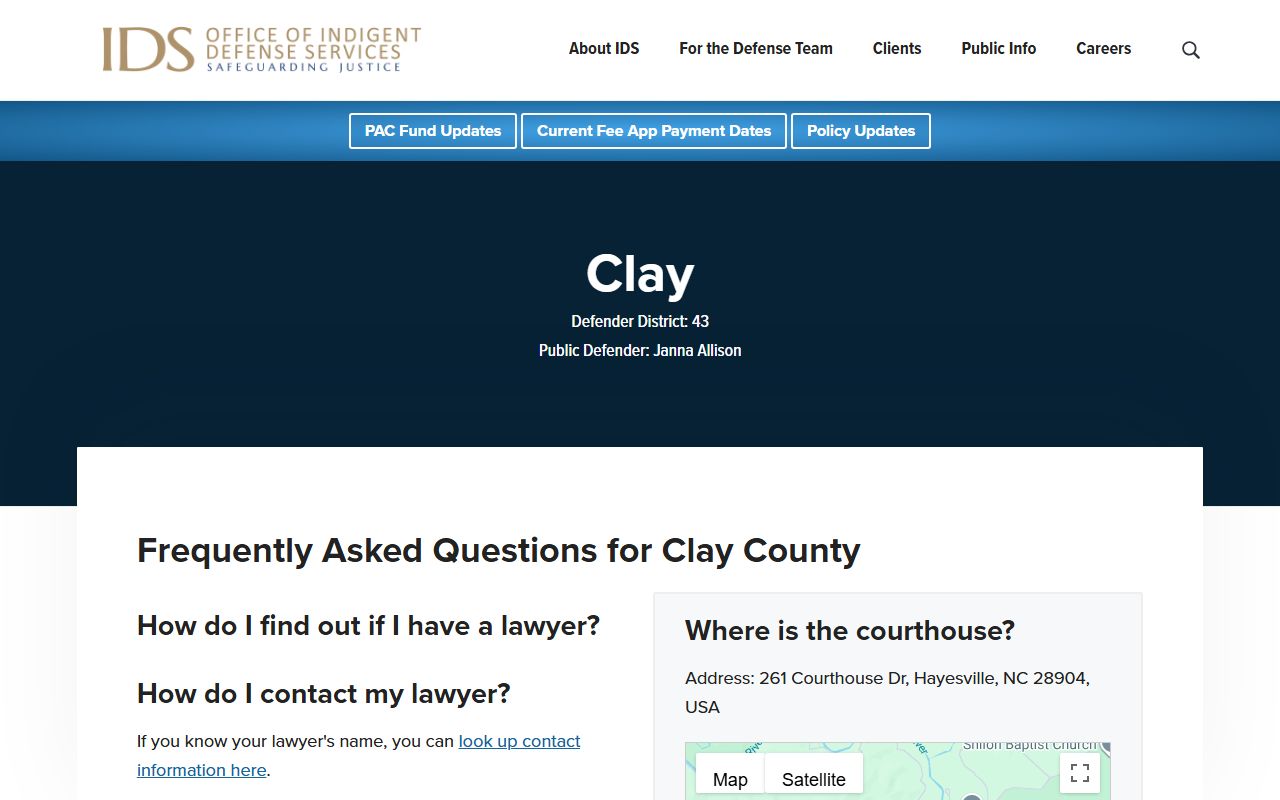
Defense counsel information can matter when a docket shows appointed counsel, pending motions, plea discussions, or a need to contact the attorney of record.
Clay County Charges vs Convictions
Being charged is not the same as being convicted. Clay County criminal court records can show charges that were pending, amended, reduced, dismissed, or resolved by plea or trial. The charge is the accusation. The conviction is a court outcome after a guilty plea, verdict, or other qualifying finding.
| Charge | Conviction | |
|---|---|---|
| Stage | Accusation filed by citation, warrant, summons, order, information, or indictment. | Final result after plea, trial verdict, or other judgment. |
| Meaning | The state alleges an offense. | The court records guilt or responsibility for that offense. |
| Record Risk | May still appear even if later dismissed unless sealed or expunged. | Can affect sentencing, probation, license, employment, and later expunction eligibility. |
Clay County Dispositions and Sentences
Disposition is the key field for understanding how a criminal charge ended. A docket event may show that a motion was filed or a hearing occurred, but the disposition shows the result. Common plain-language outcomes include guilty, not guilty, dismissed, reduced, transferred, appealed, or closed. The exact portal label should be checked against the case file or clerk copy when the record will be used for a formal purpose.
Sentence fields appear only after conviction or another judgment that permits punishment or conditions. A sentence can include active confinement, supervised probation, unsupervised probation, fines, court costs, restitution, community service, treatment requirements, payment deadlines, or compliance reviews. For Clay County traffic-related criminal matters, some convictions can also be reported to NCDMV.
The U.S. Attorney for the Western District of North Carolina source image is included because federal criminal prosecution is separate from Clay County state criminal court records.
Federal charges involving Clay County route through federal courts and prosecutors, while ordinary county criminal cases remain in North Carolina District or Superior Court.
Sealed Clay County Criminal Records
Sealed and expunged records both restrict public access, but they are not the same. A sealed criminal record is hidden from ordinary public view under a statute, court rule, or court order. An expunction removes qualifying records from public access after the court grants the petition. A dismissed charge may still need an expunction process before it stops appearing in public systems.
| Sealed | Expunged | |
|---|---|---|
| Visibility | Withheld from ordinary public search or inspection. | Removed from public access under the expunction order. |
| How It Happens | By statute, court rule, or judge's order. | By petition, eligibility review, and court order. |
| North Carolina Example | Juvenile, adoption, mental health, or court-sealed material. | Certain nonviolent misdemeanor or felony convictions may qualify under G.S. 15A-145.5. |
The G.S. 15A-145.5 source image is tied to expunction of certain nonviolent misdemeanor and felony convictions.
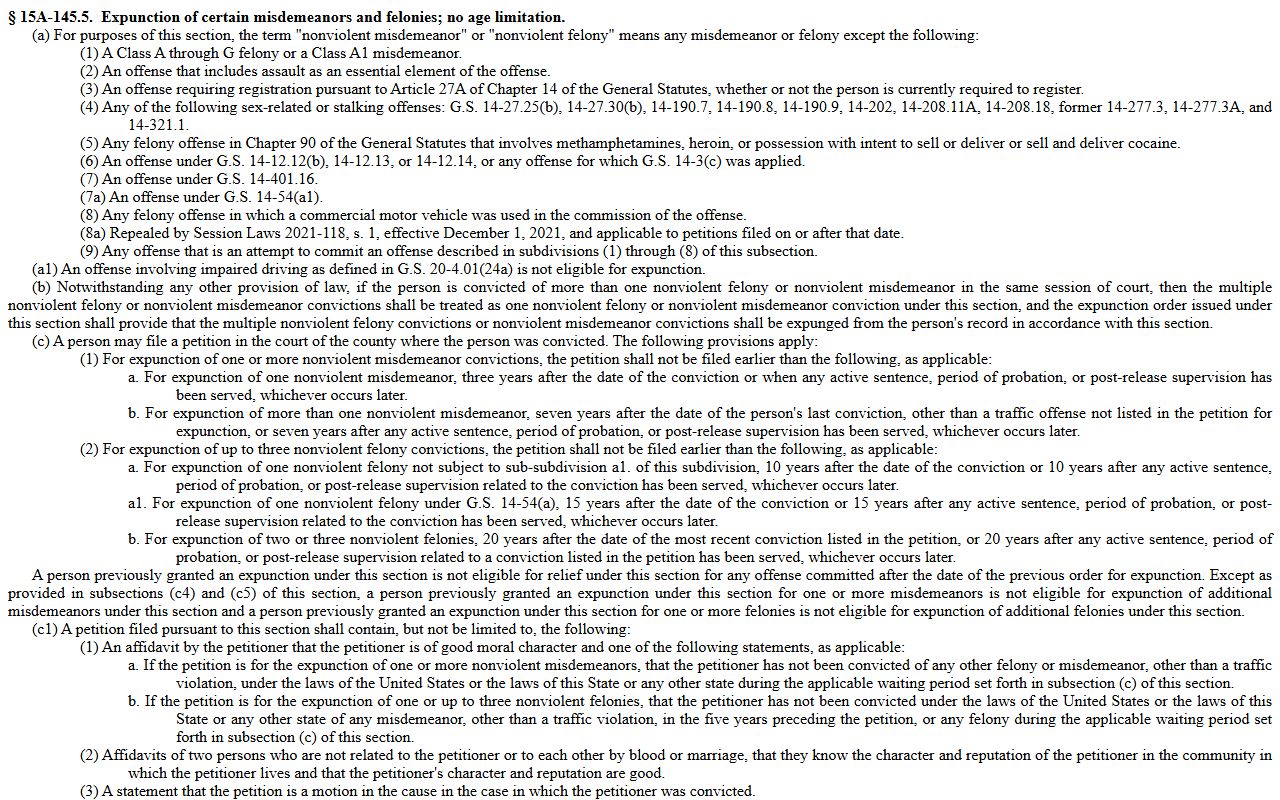
Eligibility depends on the exact charge, prior record, waiting period, statutory exclusions, and final court order, so the clerk record should be checked first.
Clay County Criminal Public Access
Most adult Clay County criminal court records are public unless a statute, court rule, or court order makes them confidential. The clerk record rule in G.S. 7A-109 makes court records, dockets, and indexes open during regular office hours except as prohibited by law. The practical route is portal search first, then the clerk terminal or copy request for complete records.
Key Statutes:
G.S. 7A-109 - Clerks maintain court records, dockets, and indexes that are open unless law restricts them.
G.S. 7B-3000 - Juvenile court records are maintained by the clerk but are not public like adult criminal files.
Clay County Criminal Background Checks
For informal case research, a portal result can help identify a Clay County criminal case. For employment, housing, credit, insurance, licensing, or other regulated screening, do not treat a casual lookup as a formal background report. The Judicial Branch also warns that portal searches should not replace clerk verification when a background check depends on accurate criminal case history.
Important: Verify criminal court records with the Clerk of Superior Court before using a result for any formal decision.
Restricted Clay County Criminal Records
Juvenile delinquency and undisciplined records are not open like adult criminal court records. Adoption, mental health, sealed, and expunged materials can also be withheld. Public files may redact Social Security numbers, financial account data, minor identifying details, medical information, and addresses protected by law. If a case cannot be found online, it may be restricted, too old for easy portal access, filed under a different case number, or available only through the clerk.
The juvenile records statute source image shows why Clay County juvenile court files are treated differently from adult criminal case records.
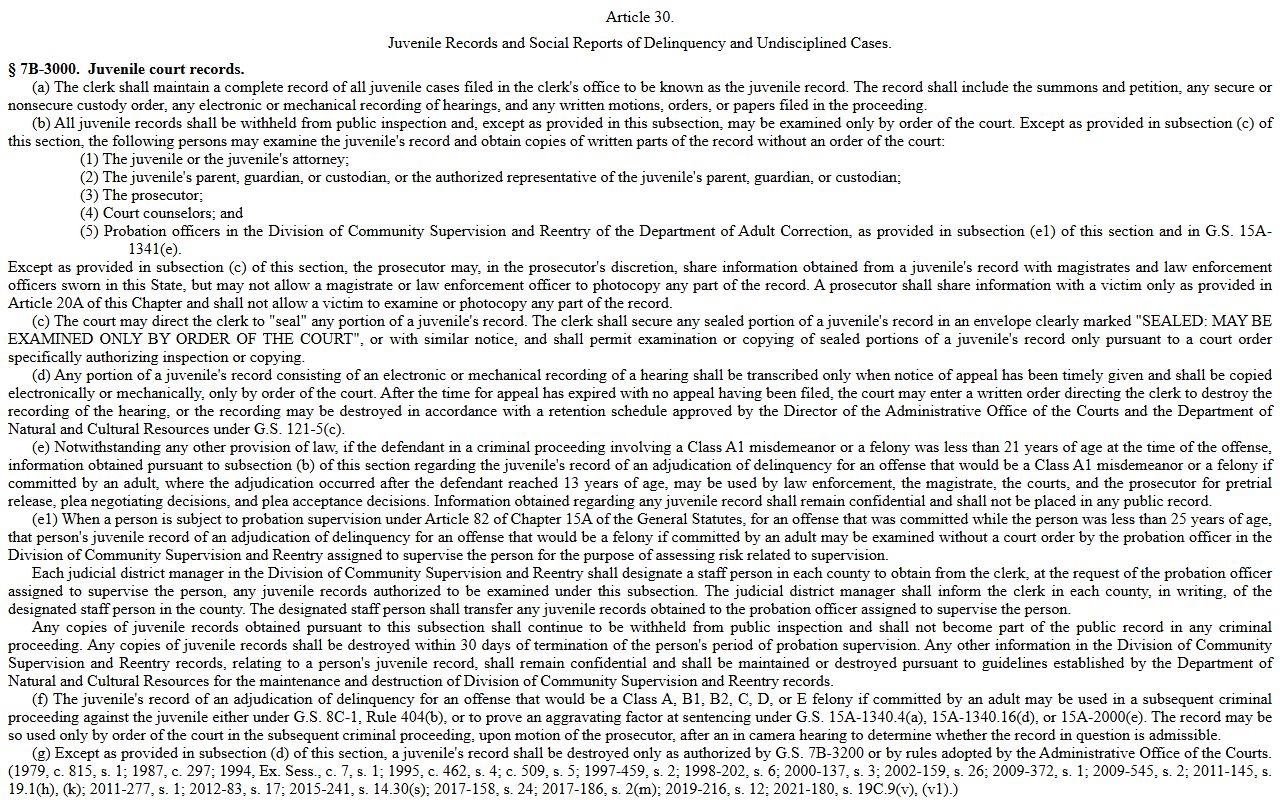
That distinction is important when a search returns no result even though a family member or witness believes a youth court matter exists.