
What Clay County Court Dockets Show
A docket is the court's running list of case events. In Clay County, docket information can show the case number, party names, court division, filing date, hearing date, courtroom or session details, event type, continuance status, order entry, judgment, disposition, payment event, or notice of appeal. It is a timeline. It is not the full packet of pleadings, evidence, exhibits, transcripts, or certified copies.
Clay County uses North Carolina's state court structure. Superior Court handles felonies, higher civil matters, and appeals from District Court. District Court handles misdemeanors, infractions, traffic, domestic, juvenile, magistrate-related matters, and many civil cases. Both divisions may generate docket entries, but sealed cases, juvenile matters, adoption records, and many mental health proceedings do not appear like ordinary public docket records.
The official North Carolina court date lookup is the main source image for Clay County court dockets and hearing searches.
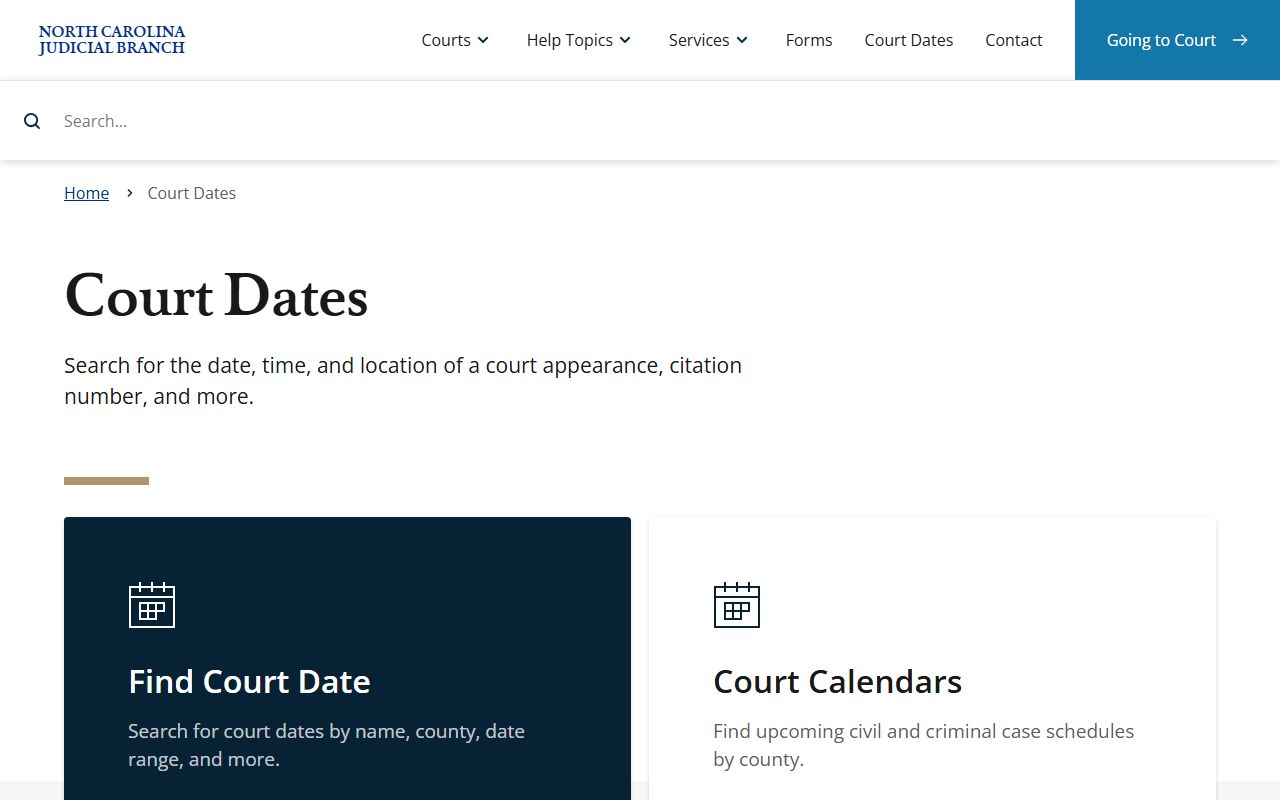
That court-date tool is the best first stop when the immediate question is whether a Clay County case is set for a future session.
Find Clay County Court Dockets Online
Clay County docket access starts with two statewide tools: the North Carolina eCourts Portal for case information and the court-date lookup for scheduled appearances. The Clay County Judicial Branch page also links to civil calendars, criminal calendars, court dates, forms, payments, and local administrative schedules. If the online docket is incomplete, the fallback is the public terminal or clerk's counter.
- Open the eCourts Portal or the official court-date search.
- Choose the search route that matches the record: name, case number, citation number, attorney, or county.
- Select Clay County or the relevant location filter when the statewide interface offers it.
- Review the case number, court division, event type, hearing date, and case status before relying on the result.
- Call or visit the Clerk of Superior Court when the docket entry points to a document, certified copy, or older file not visible online.
The court-date lookup is built for scheduling questions. The eCourts Portal is broader and can show docket entries, case status, public case details, and documents where available. Payments and citation matters may route through payment tools, while judgment dockets can route through NC Judgment Search.
Sample Clay County Docket Entry
Official research did not capture a live Clay County sample docket image, but the field inventory from state search descriptions and public-terminal guidance identifies the core fields a public user should expect. Docket records usually read from newest or oldest event, depending on the search system. Each entry should be matched to the correct case number because names can repeat and one person may have more than one case.
| Field | What It Shows |
|---|---|
| Case Number | The unique Clay County file number, often with year and case-type letters. |
| Court Division | Superior Court, District Court, or a related court function. |
| Entry Date | Date the filing, order, hearing, payment, or other docket event was posted. |
| Event Type | Complaint filed, citation filed, warrant issued, indictment, motion, order, judgment, dismissal, continuance, or appeal notice. |
| Hearing Information | Date, time, courtroom or session, judge, hearing type, and continuance status where public. |
| Party or Attorney | The party, attorney, or court actor tied to the event when the system displays it. |
| Disposition | How a charge, claim, or case ended when the docket has reached that point. |
| Document Availability | Some public documents may be viewable online, but certified copies come from the clerk. |
G.S. 7A-109 is the source image for the clerk record and docket inspection rule used with Clay County court dockets.
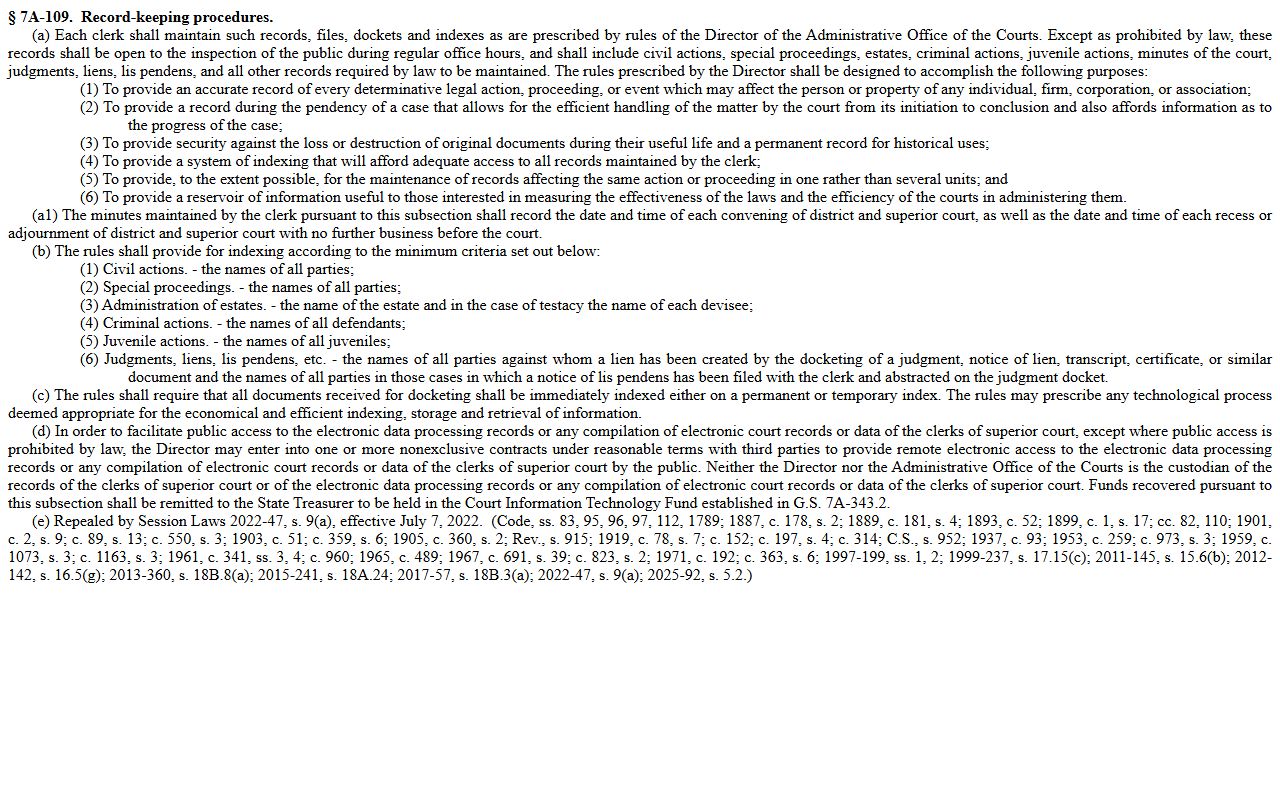
The statute explains why the clerk's office remains important even when a docket event can be found through a statewide online lookup.
Clay County Court Docket Sources
Clay County does not have a separate county court, justice of the peace court, or local municipal court that publishes a different docket system. The docket path follows the North Carolina General Court of Justice. That matters for searches because a felony, misdemeanor, traffic infraction, civil claim, juvenile matter, and estate file may all have different visibility even when they are tied to the same courthouse campus.
- Superior Court dockets cover felony matters, higher civil cases, and District Court appeals.
- District Court dockets cover misdemeanors, traffic, infractions, domestic cases, juvenile matters, and many civil matters.
- Magistrate-related records can connect to warrants, initial appearances, small claims, and front-line judicial actions.
- The Clerk of Superior Court keeps dockets, indexes, files, public terminal access, copies, estates, and special proceedings.
- The Court of Appeals and Supreme Court of North Carolina handle appellate review, not local fact-finding dockets.
For court-date questions, start with the official lookup. For calendar questions that are not clear online, use the Clay County contact directory and clerk number. For full case copies, use the clerk rather than the court-date lookup.
Clay County Dockets vs Case Records
A Clay County docket is a case map. The full case file is the record set behind that map. A docket may tell a reader that a motion was filed or an order was entered, but the motion or order itself may require portal document access, a public terminal, or a clerk copy request. This is why docket lookups are strong for timing and status, while complete records are better for legal review.
| Docket | Full Case Record | |
|---|---|---|
| Format | Timeline of entries, hearings, and status changes. | Pleadings, orders, judgments, notices, motions, and other case documents. |
| Best Use | Check a court date, event, disposition, or case progress. | Review exact filings, obtain certified copies, or verify a complete history. |
| Access Point | Court-date lookup, eCourts Portal, calendars, or public terminal. | Portal documents where available, clerk terminal, paper file, or clerk copy request. |
| Limits | May omit sealed entries, restricted details, or document text. | May require in-person review, copy fees, redactions, or confidentiality screening. |
The court costs help topic is one official source image for the fee and payment side that can appear in Clay County docket entries.
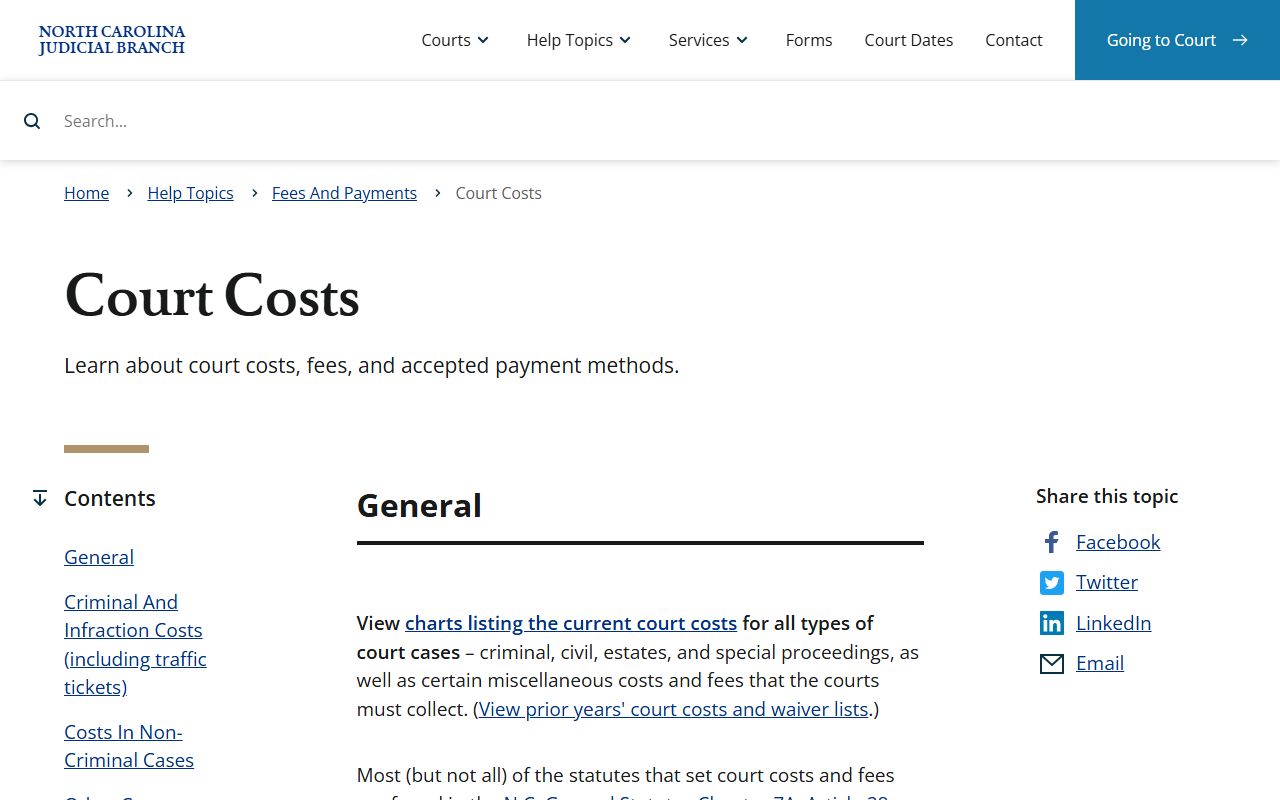
Docket entries can show costs, fines, payment status, or failure-to-pay events, but the official amount should be confirmed through court payment records or the clerk.
Read a Clay County Docket
Start with the case number and division. North Carolina case numbers often begin with the last two digits of the year followed by case-type letters. Traffic guidance identifies CR as a file with at least one criminal offense and IF as an infraction-only matter. A case can include both criminal and infraction issues under a CR number, so the docket must be read charge by charge.
Then read the event sequence. Common docket events include complaint filed, citation filed, warrant issued, indictment, arraignment, motion filed, order entered, plea, judgment, dismissal, continuance, notice of appeal, and payment. A continuance means the matter was postponed. A disposition explains how a charge or case ended. A judgment is the court's final or enforceable decision.
Missed court dates can have serious consequences. North Carolina traffic guidance notes that failure to appear can lead to extra fees, license consequences, and sometimes an order for arrest. If a Clay County docket shows a missed date, the practical route is to contact the Clerk of Superior Court, the attorney of record, or the District Attorney when prosecution decisions are involved.
Chapter 132 of the North Carolina General Statutes is the source image for the broader public-record framework that sits beside court-specific docket rules.
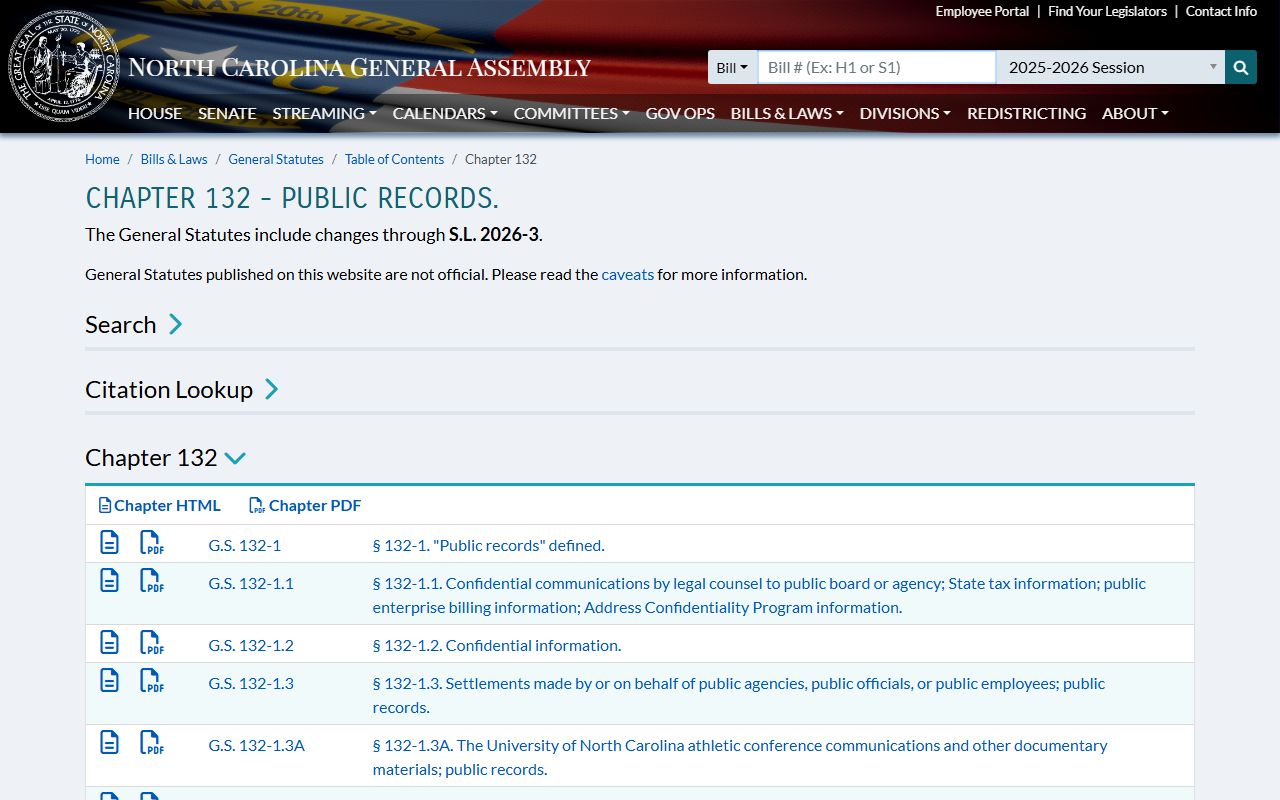
Public-record law supports access, but court dockets still follow court-specific rules, sealed-record orders, and confidentiality statutes.
When a Clay County docket uses a short label, compare it with the surrounding events. A dismissal beside one charge does not dismiss every count unless the docket shows each count ending that way. A continued hearing is not a final result. A payment entry does not always mean the full case is closed. For exact status, match the docket to the case number and ask the clerk for the complete record when the entry affects court attendance, license status, bond, or a formal background question.